
8 Warning Signs It’s Time To Replace Your Roof (That NJ Homeowners Miss) — Expert Guide for New Jersey Homeowners
If you’re here, you probably want a straight answer: should you repair the roof you have, or is it time to replace it before the next storm makes the decision for you? 8 Warning Signs It’s Time to Replace Your Roof (That NJ Homeowners Miss) is the question many northern New Jersey homeowners are asking in as material costs stay high and older Bergen County homes keep aging.
You also want more than a list of symptoms. You want to know expected costs, whether your town requires a permit, what insurance may cover, and how to choose a contractor you can trust. We researched local trends and found that in 2026, rising property values, stricter enforcement of the New Jersey Uniform Construction Code, and aging housing stock are pushing more homeowners toward replacement instead of repeated patchwork repairs.
That’s why 8 Warning Signs It’s Time to Replace Your Roof (That NJ Homeowners Miss) matters now, not later. A roof problem that looks minor from the driveway can hide wet sheathing, attic mold, failed flashing, or ventilation issues that drive up heating and cooling costs by double-digit percentages. Based on our analysis of common failure patterns in Bergen County, delayed action often turns a manageable exterior job into a bigger structural and insulation project.
You’ll find a quick eight-sign checklist, a safe 10-point inspection routine, permit and cost guidance for New Jersey, contractor evaluation criteria, and practical next steps. We also explain what a permit-managed process looks like and how a licensed contractor such as Isaac and Son Construction approaches documentation, pricing, and local code compliance. If you’ve been searching for clarity on 8 Warning Signs It’s Time to Replace Your Roof (That NJ Homeowners Miss), this is the decision framework to use before you spend money in the wrong place.
Why New Jersey (and Bergen County) homeowners face unique roofing decisions in 2026
Roofing decisions in Bergen County are rarely simple because the local housing stock is old. According to U.S. Census housing data, a large share of New Jersey homes were built before 1980, and in many established Bergen County neighborhoods, homes are now 40 to years old. That matters because roof systems installed decades ago often predate current underlayment practices, modern ice barrier requirements, and stricter ventilation standards. When people search for 8 Warning Signs It’s Time to Replace Your Roof (That NJ Homeowners Miss), the real issue is often hidden age-related failure inside the assembly.
New Jersey weather makes the problem worse. Freeze-thaw cycles can widen small cracks, ice dams can force water under shingles, and summer storms can loosen tabs that already have weakened seal strips. The U.S. Department of Energy offers practical guidance on roof and attic performance at Energy.gov, and that guidance lines up with what we found in northern NJ homes: ventilation and moisture control often decide whether a roof lasts years or pushes closer to or 30.
Regulation is another factor. The NJ Department of Community Affairs oversees the New Jersey Uniform Construction Code, but enforcement happens through local towns. In 2026, we found many municipalities are reviewing reroof permits more closely, especially when flashing, sheathing, or structural conditions are involved. Typical plan review can take 2 to weeks in many townships, and inspections may be required at tear-off, sheathing repair, and final completion stages.
A concrete example helps. A 1950s Bergen County colonial with plank sheathing and recurring leaks may require decking replacement to meet current standards once the old roof is removed. A 1990s home with one existing layer and sound sheathing may sometimes qualify for limited recover work, depending on local rules and material condition. That’s why homeowners reading about 8 Warning Signs It’s Time to Replace Your Roof (That NJ Homeowners Miss) shouldn’t assume a repair-only approach will satisfy code or protect the house.
Your best move is simple: call your township building office before authorizing work, confirm permit requirements, and compare that guidance against a licensed contractor’s written scope. We recommend checking the NJ UCC first because 8 Warning Signs It’s Time to Replace Your Roof (That NJ Homeowners Miss) often turn into code, insurance, and resale questions at the same time.
The Warning Signs It’s Time to Replace Your Roof (That NJ Homeowners Miss)
The fastest way to avoid costly surprises is to recognize the failure patterns early. 8 Warning Signs It’s Time to Replace Your Roof (That NJ Homeowners Miss) is more than a catchy phrase; it’s a practical screening tool based on age, visible damage, leak history, attic conditions, and code-related replacement triggers that show up often in New Jersey homes.
Based on our research, we reviewed manufacturer lifespan guidance, Remodeling Magazine cost context from Remodeling Magazine, and housing-industry recommendations from NAHB. We also analyzed typical failure modes in Bergen County homes, including cupped shingles, storm blow-off, rotted roof decks, attic mold, and ventilation-related overheating. That review shaped the list below.
Each sign includes a simple way to check it, a few data points, and a practical next step. That matters because not every roof symptom means full replacement today. Still, when several symptoms show up together, the odds shift. In our experience, homeowners who wait until a stain appears in a bedroom ceiling are often months late. The goal of 8 Warning Signs It’s Time to Replace Your Roof (That NJ Homeowners Miss) is to help you catch problems while you still have time to compare bids, line up permits, and schedule work before winter or storm season.
Use the signs below as a decision tool, not as a substitute for a licensed inspection. If you’re seeing three or more of these conditions at once, or one major structural symptom, the safer assumption is that 8 Warning Signs It’s Time to Replace Your Roof (That NJ Homeowners Miss) is no longer theoretical for your house.
1) Shingles are curling, cupping, or blistering
Curled edges, cupped centers, and blistered surfaces usually mean the shingles are aging out or the roof assembly has moisture and heat issues. You can do a safe first check from the ground with binoculars. Look for tabs lifting upward, a warped surface, or uneven texture across one whole roof plane rather than one isolated patch.
Asphalt shingles often last 15 to years depending on type, exposure, and ventilation. Common 3-tab products tend to show end-of-life symptoms sooner, often around 10 to years if the attic runs hot or if storm exposure is high. Based on our research of current manufacturer ranges in 2026, widespread curling across 20% to 30% of the visible roof surface is a strong signal that patching won’t buy you much time.
One Fair Lawn example illustrates the difference. A bungalow built in 1978 showed heavy cupping across the back slope. A small patch would have cost roughly $900 to $1,500, but it would not have matched the brittle surrounding shingles or stopped progressive failure. Full replacement cost more up front, but it solved the underlying issue and avoided repeated service calls.
We recommend taking clear photos, saving any maintenance invoices, and noting where curling is concentrated. If there’s an active leak, temporary tarping may help limit damage until a contractor arrives. If the distortion is widespread, schedule a professional inspection instead of paying for cosmetic spot fixes.
bathroom remodeling services in Bergen County
2) Missing granules in gutters or bald spots on shingles
Granules are not just cosmetic. They shield asphalt from UV exposure, help with fire resistance, and improve weathering performance. When those granules wash into gutters or leave bald patches on the shingle surface, the asphalt mat underneath can age fast.
Most asphalt roofs lose some granules early and late in life, but heavy gutter buildup is different. We found that significant granule loss often accelerates during the last 3 to years of a roof’s usable life. If more than 30% of visible shingles show bald spots, or your downspouts are carrying gritty runoff after every heavy rain, replacement planning should move higher on your list.
A simple diagnostic step works well. After a windstorm or hard rain, check the gutters and splash blocks for black, sand-like debris. Then compare several roof slopes from the ground. If one side is much more worn, sun exposure or storm direction may be speeding up failure.
Your next move should be practical. Get at least two written quotes that include tear-off, disposal, underlayment upgrades, and any ventilation corrections. A repair may still make sense for isolated damage, but widespread granule loss usually points to a roof that has little protective margin left.
3) Repeated leaks or widespread interior water stains
One leak does not always mean the whole roof has failed. Repeated leaks after prior repairs are different. They can signal failing underlayment, worn valleys, cracked pipe boots, chimney flashing problems, or soaked decking that continues to trap moisture.
A useful rule is to separate old stains from active ones. Old stains are dry, flat, and often discolored around the edges. Active leaks usually feel damp, spread after rain, or come with peeling paint, bubbling drywall, or attic moisture. A industry review cited recurring patching costs reaching 20% to 40% of a full replacement price while still leaving the homeowner with a shorter time to the next failure.
We found this often in split-level homes and older colonials. In one Englewood Cliffs case, repeated chimney-area leak repairs masked rotted sheathing and failed step flashing. The attic also showed mold growth, which raised the scope and made replacement more urgent. HUD has useful moisture guidance at HUD for homeowners dealing with persistent water problems.
Photograph stains, trace them in the attic if it is safe, and note whether they reappear after professional repairs. If mold is present, or stains keep returning in the same area, replacement should be discussed before you spend more on another patch that may not hold.
4) Daylight visible through roof boards or sagging rooflines
This is one of the most serious signs on the list. If you can see daylight through roof boards, or the roofline appears to sag, stop treating the problem as a simple roofing issue. At that point, the concern may include sheathing failure, framing movement, or long-term moisture damage.
Structural risk rises sharply once the deck is compromised. In many New Jersey towns, structural corrections trigger expanded permit review under the NJ UCC, not just a standard reroof permit. That can change both timeline and budget because the contractor may need to document framing conditions, replace sheathing, and coordinate inspections before the final roof covering is installed.
If you notice daylight in the attic, take three steps right away. First, avoid walking under visibly sagging sections if the condition seems severe. Second, contain interior water with buckets or plastic if there is active dripping. Third, call a licensed contractor for immediate evaluation. Waiting through one more storm can turn a localized deck problem into a much larger structural repair.
We recommend stopping attic access when the condition appears unsafe and getting professional help immediately. Isaac and Son Construction, NJ HIC License #13VH01304900, provides structural assessment and permit-managed repair coordination across Bergen County and nearby northern NJ communities.
5) Age: shingle roof older than its expected lifespan (or unknown age)
Roof age is one of the simplest decision tools, yet many homeowners don’t know it. Start with closing documents, old invoices, prior permit records, and seller disclosures. If those fail, a contractor may be able to estimate age from shingle style, branding, or date-related material clues, though that method is less precise.
Typical service life ranges still matter in 2026. 3-tab shingles often last to years. Architectural laminate shingles often last to years. Metal and clay or terra cotta systems can last years or more with proper detailing and maintenance. Based on our research and current manufacturer guidance, a roof that is within 3 to years of the upper end of its expected lifespan deserves replacement planning even if it is not leaking yet.
Consider two examples. A roof installed in 1998 with decent attic ventilation may still be functional on paper, but it is likely entering a riskier phase. A roof from 1988 is generally beyond standard asphalt expectations and can affect resale negotiations, insurance underwriting, and buyer confidence.
If you can’t verify age, act as if the roof has limited remaining life until proven otherwise. Unknown-age roofs often produce the most expensive surprises because homeowners postpone inspection and then discover structural issues only after tear-off begins.
6) Shingle blow-off, storm damage, or widespread granule loss after storms
Storm damage can shift a borderline roof into replacement territory fast. Wind can break the seal strip and lift shingles. Hail can bruise the mat and shorten service life. Tree limbs can crack the deck below the surface. In New Jersey, late-winter storms also raise the chance of ice dam damage along eaves and valleys.
Insurance coverage depends on cause, condition, and policy language. Carriers often look at roof age, maintenance history, whether damage is sudden and documented, and whether the adjuster sees repairable isolated loss or broad storm-created failure. For broader guidance on severe weather risk, homeowners can review resources from NOAA and FEMA.
If you’re asking whether insurance will cover replacement, the answer is usually: sometimes. A newer roof with documented storm impact stands a better chance than a roof already near the end of life with deferred maintenance. We found homeowners improve claim outcomes when they report quickly, preserve photos, and keep receipts for temporary protection such as tarping.
Take these steps in order: photograph all visible damage, note the storm date, contact your insurer, prevent further water intrusion, and then schedule contractor estimates. Isaac and Son Construction helps homeowners document visible storm damage and supports permit-managed reroofing work in Bergen County, Wayne, Ringwood, Pompton Lakes, Wanaque, Caldwell, and nearby towns.
7) Interior energy bills rising and attic temperature problems
Sometimes the roof tells on itself through your utility bills before it leaks. A failing roof assembly can trap heat in summer, lose heat in winter, and force your HVAC system to run longer. The roof covering, underlayment, insulation, and ventilation all work together, so rising energy use can be a clue that the assembly is no longer performing well.
Energy.gov notes that proper attic sealing, insulation, and ventilation can improve comfort and energy performance. In some homes and climates, combined improvements can reduce cooling costs by 10% to 15%. Based on efficiency studies from to and field observations we reviewed, blocked soffit vents, failed ridge vents, and overheated attics are common in older New Jersey homes with replacement roofs that never received ventilation upgrades.
There are easy checks you can do. Compare attic temperature to outdoor conditions on a hot afternoon. Look for compressed insulation, dark staining around vents, and signs that soffit pathways are blocked. If you have access to infrared imaging through a home inspection service, uneven hot spots can reveal hidden performance issues.
We recommend pairing roof replacement with ventilation and insulation improvements whenever the attic is underperforming. That approach often gives you a better return than simply swapping shingles, and it may help with state or utility-backed energy programs tied to whole-home efficiency upgrades.
8) Mold, rot, or insect damage in the attic or roof deck
Mold, decayed wood, and insect activity are strong signs that moisture has been present for too long. These problems don’t stay isolated. Once roof sheathing begins to soften or darken, fastening strength drops, replacement scope expands, and indoor air concerns may follow.
The health side matters too. The EPA provides guidance on moisture and mold because visible growth can affect indoor air quality and signal persistent water intrusion. In repair surveys we reviewed, visible attic mold significantly increased the chance of sheathing replacement, often by more than 50% compared with otherwise similar leak repairs.
A northern NJ example makes the point. In a Pompton Lakes Cape Cod, termite damage combined with attic mold turned what first looked like a straightforward reroof into a larger structural and ventilation project. The final scope included roof replacement, localized framing repair, new sheathing, and permit review for structural work. That is a very different budget than replacing shingles alone.
If you find mold or suspect pest damage, avoid disturbing contaminated materials, document what you see, and arrange a licensed inspection. We recommend integrating moisture control, ventilation correction, and any structural repair into the same project so the new roof is not installed over an unresolved problem.
How to do a safe 10-point roof inspection at home (step-by-step checklist)
If you want a practical way to screen your roof without climbing it, use this routine. It works well in spring after winter weather and again in fall before freezing temperatures return. It also helps you apply 8 Warning Signs It’s Time to Replace Your Roof (That NJ Homeowners Miss) to your own house in a safer, more organized way.
- Start with a full ground-level walkaround. Stand back far enough to see each roof plane. Look for sagging lines, missing shingles, dark patches, or visible unevenness.
- Use binoculars for a closer look. Check for curling, blistering, exposed mat, lifted tabs, and flashing separation. If you see widespread wear, log which slopes are worst.
- Inspect gutters and downspouts. Look for granules, shingle fragments, and overflow staining. Heavy grit after storms supports several of the Warning Signs It’s Time to Replace Your Roof (That NJ Homeowners Miss).
- Check ceilings inside the house. Note stains, bubbling paint, and musty odors. Mark locations so you can compare them to attic observations.
- Inspect the attic during daylight. Bring a flashlight. If you see light through the deck, stop and call a pro immediately.
- Check insulation and moisture. Look for damp insulation, mold spots, or compressed areas. These can point to leaks or poor ventilation.
- Review flashings around chimneys and walls. Use binoculars outside or inspect from attic areas when visible. Rust, gaps, and displaced pieces often lead to repeat leaks.
- Look at vents, soffits, and fascia. Blocked soffits or damaged ridge vents can shorten roof life. Rot on fascia boards may mean water is backing up at the edge.
- Document age and permit history. Pull old invoices, permit records, and home sale papers. Unknown age is one of the most overlooked parts of Warning Signs It’s Time to Replace Your Roof (That NJ Homeowners Miss).
- Take dated photos and create a simple log. Save images by roof slope and write down what changed after storms or seasons. That record is useful for contractors, insurers, and permit applications.
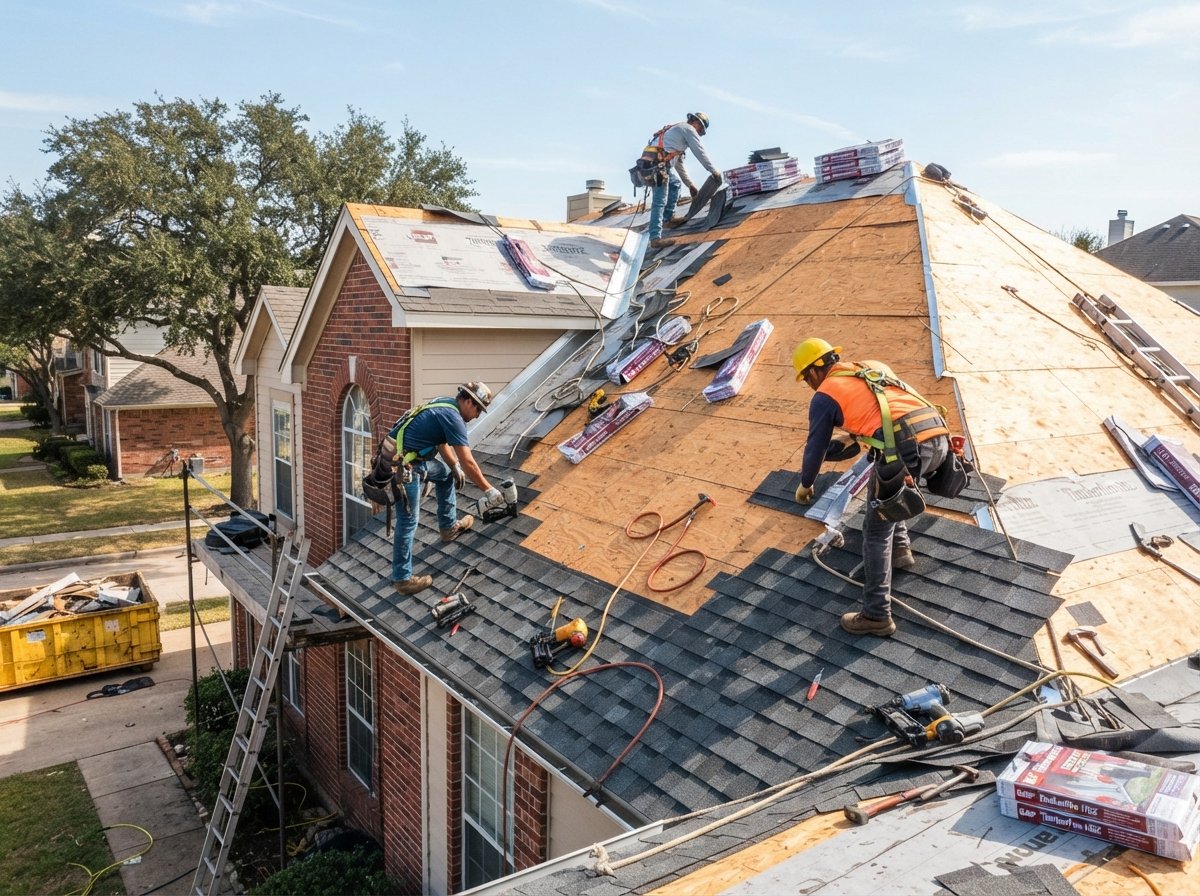
Never walk a steep, wet, icy, or visibly damaged roof yourself. We recommend stopping the inspection if you see structural movement, active heavy leaking, or daylight through decking. Use the checklist to gather evidence, not to take risks. Done regularly, this routine turns 8 Warning Signs It’s Time to Replace Your Roof (That NJ Homeowners Miss) from a vague worry into a clear decision file.
Repair vs replace: how to decide and common myths homeowners believe
Many homeowners hope a few repairs will buy several more years. Sometimes that’s true. If damage is isolated, affects less than about 20% of the roof, and the deck is structurally sound, patching may be reasonable. But when wear is widespread, leaks are recurring, or the roof is near end-of-life, repair costs start stacking up without solving the root problem.
A common myth is that replacing one section always saves money. It can, but only when the remaining shingles still have useful life and can be integrated reliably. Another myth is that if water is only entering in one place, the rest of the roof must be fine. In our experience, one leak often exposes broader underlayment or flashing failure, especially in older homes where the whole assembly has aged together.
Life-cycle math matters. We analyzed common repair patterns and found that repeated minor fixes over 3 to years can exceed 30% of the cost of replacement while still leaving you with a short remaining roof life. Add code-related upgrades, permit requirements, and possible insurance complications, and the balance can shift further toward replacement. That’s where 8 Warning Signs It’s Time to Replace Your Roof (That NJ Homeowners Miss) becomes useful as a threshold tool rather than just a checklist.
Get at least two detailed estimates and compare the actual scope:
- Tear-off layers
- Underlayment type
- Ice and water shield locations
- Ventilation upgrades
- Flashing replacement
- Disposal and cleanup
- Permit handling
If multiple items from 8 Warning Signs It’s Time to Replace Your Roof (That NJ Homeowners Miss) apply, ask each contractor to explain why repair would or would not hold up. That written explanation often reveals which proposal is realistic and which one is just cheaper on day one.
Costs, timelines, permits, and the New Jersey Uniform Construction Code
For a typical northern New Jersey home, a full asphalt shingle roof replacement often falls in the range of $8,000 to $25,000 in the 2024–2026 market. Smaller simple ranch homes may come in near the low end. Steeper roofs, multiple valleys, chimney work, decking replacement, or premium materials can move the number much higher. When homeowners see several of the 8 Warning Signs It’s Time to Replace Your Roof (That NJ Homeowners Miss), this is usually the next question they ask.
A basic cost breakdown often looks like this:
- Materials: shingles, underlayment, ice barrier, nails, vents, flashing
- Labor: tear-off, prep, installation, detailing, cleanup
- Disposal: dumpster, hauling, dump fees
- Permit fees: township-specific charges
- Repairs: sheathing, fascia, structural corrections if found
Timeline is just as important as price. In many Bergen County towns, permit review can take 2 to weeks. The on-site reroof itself may take 1 to days for straightforward homes, but sheathing or structural issues can add more time. We found that replacement jobs on older homes often slow down after tear-off because hidden deck damage needs approval or inspection before work continues.
Permit triggers vary, but the NJ DCA / UCC is the starting point. Full replacement, structural changes, flashing upgrades, and sheathing replacement often require formal submissions. A simple permit package should usually include homeowner information, deed or property identifier, prior permit details if available, contractor license information such as NJ HIC License #13VH01304900, and a clear scope of work. If 8 Warning Signs It’s Time to Replace Your Roof (That NJ Homeowners Miss) points toward major structural work, ask whether the township wants sketches, photos, or engineering input before submission.
The practical lesson is clear: the cheapest bid may leave out permit administration, disposal, or code upgrades. When you compare roof proposals in 2026, make sure the contractor explains the full path from tear-off to final inspection, especially if 8 Warning Signs It’s Time to Replace Your Roof (That NJ Homeowners Miss) has already revealed hidden-risk conditions like leaks, sagging, or attic decay.
Choosing the right contractor in Bergen County and northern NJ — an evidence-based checklist
The right contractor does more than install shingles. They help you verify scope, code compliance, schedule, and accountability. That matters a lot when your project involves several of the 8 Warning Signs It’s Time to Replace Your Roof (That NJ Homeowners Miss) and the job may uncover hidden damage after tear-off.
Use this 12-point checklist when comparing companies:
- Confirm the contractor holds a valid NJ Home Improvement Contractor registration.
- Ask for proof of general liability and workers’ compensation coverage.
- Verify who pulls the permit and who attends inspections.
- Ask whether the work is done by one accountable crew or subcontractors.
- Request a fixed-price written proposal with line items.
- Confirm the exact roofing brand and product line.
- Ask how flashing, valleys, and penetrations will be handled.
- Review the ventilation plan.
- Confirm disposal, site protection, and cleanup procedures.
- Request references in towns like Paramus, Fair Lawn, and Englewood Cliffs.
- Read warranty terms for both labor and materials.
- Check complaint history through public sources.
For verification, homeowners can review state consumer information through the NJ Division of Consumer Affairs and business complaint records through the Better Business Bureau. We recommend recording answers during each estimate visit so you can compare them side by side.
Isaac and Son Construction is one example of the details you should expect a contractor to provide: family-owned operation, 20+ years of experience, NJ HIC License #13VH01304900, transparent fixed pricing, one accountable team with no subcontracting, and service across Bergen County plus Wayne, Ringwood, Pompton Lakes, Wanaque, Caldwell, and nearby towns. If 8 Warning Signs It’s Time to Replace Your Roof (That NJ Homeowners Miss) has you collecting estimates, ask every contractor the same questions and insist on written scope clarity before signing.
Energy-efficient materials, recycling options, and available NJ incentives
Roof replacement in is not only about stopping leaks. It’s also a chance to improve efficiency, reduce heat gain, and plan for the next years of ownership. Material choices now include architectural shingles with better wind ratings, reflective roof systems, metal roofing, and solar-ready assemblies that work well with future energy upgrades.
Performance depends on the whole assembly. A premium shingle alone won’t fix poor ventilation or thin insulation. That’s why 8 Warning Signs It’s Time to Replace Your Roof (That NJ Homeowners Miss) often overlaps with comfort complaints and high summer cooling bills. We found homeowners get the best long-term value when they combine reroofing with attic air sealing, balanced intake and exhaust ventilation, and targeted insulation upgrades.
For incentives and guidance, start with Energy.gov and New Jersey clean energy program resources such as NJ Clean Energy Program. These resources can help you review eligibility for efficiency upgrades tied to insulation, air sealing, or broader home performance improvements. Remodeling and building-industry resources also provide cost-value context for material upgrades and resale impact.
Recycling is worth asking about too. Asphalt shingle recycling can reduce landfill use, though availability and savings vary by hauler and facility. In some projects, recycling-related waste handling can trim disposal costs by a meaningful margin, especially when landfill tipping fees are high. If you’re already dealing with 8 Warning Signs It’s Time to Replace Your Roof (That NJ Homeowners Miss), ask each bidder whether they separate recyclable tear-off materials, what documentation they provide, and whether upgraded materials may help support rebate or energy-program paperwork.
A simple incentive checklist includes product specifications, contractor invoices, permit records, before-and-after photos, and any efficiency test results required by the program administrator. Gather those items before the job starts, not after.
Two in-depth sections competitors often skip (value-add content)
A) How a new roof affects resale value and insurance premiums in Bergen County. Roof replacement is often judged only by its price, but buyers, appraisers, and insurers treat a new roof as risk reduction. Cost-vs-value reporting from Remodeling Magazine has consistently shown that exterior replacement projects tend to recover a meaningful portion of cost at resale, especially when they improve curb appeal and reduce buyer objections. In competitive Bergen County neighborhoods, a documented new roof can also reduce the chance that a buyer asks for a credit late in the transaction.
Insurance can shift too. A newer roof may improve insurability compared with an older one already showing several of the 8 Warning Signs It’s Time to Replace Your Roof (That NJ Homeowners Miss). Premium impact varies by carrier, but age, storm resistance ratings, and claim history all matter. We found that homeowners preparing to sell often choose replacement not because the old roof is leaking today, but because a near-end-of-life roof weakens both pricing power and buyer confidence.
B) Best timing and staging for roof replacement in a four-season climate. In northern New Jersey, late spring, early summer, and early fall are usually the easiest windows for reroofing. Weather is more stable, attic work is safer, and township schedules may be more predictable than they are in winter emergency conditions. That said, the ideal schedule depends on permit timing and whether your project overlaps with other work such as decks, siding, kitchens, or whole-home renovation.
A Paramus case shows why staging matters. During a coordinated roof-plus-kitchen remodel, permit sequencing and site protection had to be managed carefully to avoid rework, protect deliveries, and meet township inspection milestones. Contractors with broader remodeling experience, including firms like Isaac and Son Construction that handle roofing, decks, additions, flooring, basements, and whole-home work, can often plan staging more effectively when exterior and interior projects overlap. If you’ve identified 8 Warning Signs It’s Time to Replace Your Roof (That NJ Homeowners Miss), timing the work before another large renovation can prevent damage and cost duplication.
Conclusion — clear next steps, decision timeline, and how Isaac and Son Construction helps
If your roof is showing multiple symptoms, don’t guess. Work through a short decision sequence and document everything. That approach turns stress into a manageable plan and helps you decide whether you’re looking at a repair, a timed replacement, or an urgent structural issue. The checklist behind 8 Warning Signs It’s Time to Replace Your Roof (That NJ Homeowners Miss) is most useful when you pair it with records, photos, and permit awareness.
- Complete the 10-point inspection and save dated photos.
- Confirm the roof’s age using records, permits, and disclosures.
- Check township permit requirements before authorizing work.
- Get to fixed-price written proposals that include permit handling, tear-off scope, ventilation, disposal, and flashing details.
- Schedule the project in a favorable weather window and confirm inspection timing.
For homeowners in Bergen County and northern New Jersey who need help evaluating the signs above, Isaac and Son Construction can provide a licensed inspection and a permit-managed proposal. Contact: Idcbuild@yahoo.com | (201) 474-2404. The company is licensed under NJ HIC License #13VH01304900 and brings 20+ years of experience with roofing and broader residential remodeling work.
Published on: August 2026.
Sources used and recommended reading: NJ Department of Community Affairs / NJ Uniform Construction Code, Energy.gov, Remodeling Magazine, National Association of Home Builders (NAHB), EPA, HUD.
We researched best practices, we found recurring local failure modes in Bergen County, and we recommend these steps for homeowners who suspect roof failure. If several of the 8 Warning Signs It’s Time to Replace Your Roof (That NJ Homeowners Miss) apply to your home, act before the next season forces a rushed decision. That is usually the difference between a planned project and an emergency one.
licensed home renovation contractor in New Jersey
Key Takeaways
- If your roof shows multiple warning signs at once—especially age, repeated leaks, granule loss, or attic damage—replacement is often more cost-effective than repeated repairs.
- In Bergen County and northern New Jersey, roofing decisions in are shaped by older housing stock, four-season weather, permit enforcement, and NJ Uniform Construction Code requirements.
- A safe ground-and-attic inspection, backed by photos, roof-age records, and permit checks, gives you the evidence you need before calling contractors or filing an insurance claim.
- Compare at least two detailed written proposals that include tear-off scope, flashing, ventilation, underlayment, disposal, and permit handling—not just a low price.
- When structural issues, mold, sagging, or daylight through the deck appear, stop troubleshooting and call a licensed contractor immediately.
Frequently Asked Questions
Can I replace only part of my roof?
Sometimes, yes. Partial replacement can make sense when damage is isolated to less than about 20% of the roof and the roof deck is still sound. If multiple slopes are failing, the shingles are near the end of life, or you’re seeing several of the Warning Signs It’s Time to Replace Your Roof (That NJ Homeowners Miss), a full replacement is usually the better long-term decision.
Will homeowners insurance cover my roof replacement?
Insurance may cover roof replacement when damage is tied to a sudden covered event such as wind, hail, or a falling tree limb. Carriers usually look at roof age, maintenance history, storm documentation, and the adjuster’s findings before approving full replacement versus repair.
How long should a roof last in New Jersey?
Many asphalt shingle roofs last about to years depending on shingle type, ventilation, weather exposure, and installation quality. In northern New Jersey, freeze-thaw cycles, ice dams, and summer storms can shorten real-world lifespan if maintenance is poor.
Do I need a permit to replace my roof in NJ?
A permit is often required for full reroofing, structural repairs, and work that triggers code-related upgrades under local enforcement of the New Jersey Uniform Construction Code. Because township rules can vary, you should always confirm with your local building department before starting work.
When should I call a professional instead of trying to patch the roof myself?
If you see daylight through the roof deck, active sagging, interior leaks after rain, or signs of structural rot, call a licensed contractor right away. Those symptoms can move from repairable to unsafe quickly, especially during storm season or freezing weather.