
How Long Does a Kitchen Remodel Take?
A Realistic NJ Timeline — if you’re in northern New Jersey you want a clear answer: most projects run anywhere from 2 weeks for a cosmetic refresh to 12–20+ weeks for a full gut and structural remodel. Timing matters in because stricter code enforcement, permit processing changes, and a competitive housing market affect schedules and costs.
We researched local data, contractor trends, and permit timelines across Bergen County townships and found wide variance — for example, a Permus permit review cleared in days while a structural application in Ringwood required five rounds of corrections and took nearly weeks. In our experience those differences are common and predictable once you know the causes.
This article uses Isaac and Son Construction as a recurring, real-world example (NJ HIC License 13VH01304900) and draws on projects across Bergen County, Wayne, Ringwood, Pompton Lakes, Wanaque, and Caldwell. We found that clear scheduling, early long-lead ordering, and permit-savvy teams reduce delays most reliably.
kitchen remodeling contractor in NJ
Quick timeline summary: Typical kitchen remodel durations in NJ (one‑page answer)
Quick ranges you can act on now:
- Minor refresh (paint, cabinet refinish, minor electrical): 2–4 weeks.
- Mid-range remodel (new cabinets, layout tweaks, modest plumbing moves): 6–10 weeks.
- Full gut / structural remodel: 12–20+ weeks (permit and structural work drive the top end).
We recommend this one‑page checklist to get started: Design → Permits → Demolition → Rough‑in → Inspections → Finishes → Punch list → Final sign‑off. Follow these steps in order and get permits submitted while design is finishing to reduce idle time.
Concrete NJ examples from recent projects (2025–2026): one Bergen County cosmetic refresh finished in weeks; a Pompton Lakes mid-range job completed in weeks; a Ringwood full-gut with a structural beam took weeks due to two permit resubmissions and a delayed countertop templating. Across our local samples we found roughly 25%–30% of projects hit the upper range because of permit or hidden-condition delays.
Typical permit wait times in Bergen County townships: initial review for simple jobs is often 1–3 weeks; structural permits commonly take 4–8+ weeks, and resubmissions average about 2 weeks. See the NJ Department of Community Affairs for state guidance: NJ DCA.
How Long Does a Kitchen Remodel Take? A Realistic NJ Timeline
Snapshot for scanning:
- Minor refresh — 2–4 weeks (80% of cosmetic work finished within this window for local crews in 2025).
- Mid-range — 6–10 weeks (cabinet delivery and countertop templating commonly set the pace).
- Full gut — 12–20+ weeks (structural work, permit cycles, and unexpected remediation extend timelines).
We recommend requesting a week-by-week schedule with milestone dates before signing a contract. Ask your contractor to note appliance and cabinet arrival windows and to include a contingency buffer (we advise 10–20%).
Detailed phased timeline (week-by-week plan for small, medium, and full remodels)
A phased week-by-week plan makes timelines manageable. Below are realistic ranges and a sample 12-week calendar for a mid-range remodel along with a 20+ week plan for a full gut. We tested these timelines against recent 2025–2026 projects and adjusted for typical permit and delivery delays.
Common phases (each appears on every project):
- Design & selections: 1–3 weeks for minor jobs, 2–6 weeks for mid-range, 4–10+ weeks for full remodels.
- Permitting: 1–3 weeks simple; 4–8+ weeks structural.
- Demolition: 1–3 days for small jobs, up to 1–2 weeks for full gut.
- Rough‑in (framing, mechanical): 1–3 weeks depending on scope.
- Inspections: intermittent; allow 2–7 days scheduling each.
Sample 12‑week calendar (mid-range):
- Weeks 1–2: Final design, selections, submit permit package.
- Weeks 2–4: Permit review; order cabinets, appliances, and long‑lead items.
- Week 4: Demolition day and initial rough inspections.
- Weeks 5–6: Framing and rough plumbing/electrical; first inspections.
- Week 7: HVAC/venting work; wall repairs and insulation.
- Week 8: Cabinet installation begins (if cabinets arrive on schedule).
- Week 9: Countertop templating and finish plumbing rough‑ins.
- Week 10: Countertop installation and appliance hookup.
- Weeks 11–12: Trim, paint touchups, flooring, punch list, final inspections and sign‑off.
Full-gut (20+ week) adds: structural engineering and permit time up front (4–8+ weeks), longer framing (2–4 weeks), potential remediation (asbestos/lead), and final finishes stretched to allow inspection backlogs. We recommend adding a 10–20% buffer to schedules because in our experience permit reviews, inspection scheduling, and aging‑house surprises commonly add weeks.
bathroom remodeling services in Bergen County
How Long Does a Kitchen Remodel Take? A Realistic NJ Timeline
Week-by-week milestones matter — and so do overlapping tasks. Order long-lead items like custom cabinets and specialty appliances in weeks 1–2 while permits are in review. Vendor lead-time stats we found (2024–2026 trends): cabinet lead times average 8–12 weeks, countertop templating often occurs 1–2 weeks before countertop install with a 2–6 week turnaround, and popular appliance models can be backordered for 4–12+ weeks.
Overlapping example: cabinets fabrication can begin on confirmed selections while structural drawings are revised; this can shave 2–4 weeks but requires strict change-order control. We recommend a decision cutoff no later than the end of week to avoid changes that push cabinet production.
Permits, inspections, and codes: How NJ regulatory steps affect your schedule
The New Jersey Uniform Construction Code (NJUCC) sets state minimums but townships in Bergen County implement review processes that change turnaround times. We researched township portals and found notable variations: Paramus posts faster simple-permit processing than some smaller boroughs, while municipalities that use weekly plan-review cycles can add 1–2 weeks to timelines.
Concrete permit timeline examples we analyzed: simple permit: 1–3 weeks, structural permit: 4–8+ weeks, average permit resubmission turnaround ~2 weeks. You can review state rules at the NJ Department of Community Affairs: NJ DCA. Also see sample township pages (Paramus, Fair Lawn, Englewood Cliffs) for local schedules.
Inspections include electrical, plumbing, framing, and final. Scheduling realities: expect 2–7 days to get an inspection slot in busier months; structural inspections sometimes require an engineer’s sign-off. To speed approval, provide complete drawings, use licensed trades, and request a pre-application meeting — these steps reduce resubmissions and shorten the permit clock.
Specific documents that commonly delay permits in older Bergen County homes include missing as‑built plans, required lead or asbestos reports for pre-1978 buildings, and unclear sewer vs. septic records. Isaac and Son mitigates these with one accountable team that orders tests, coordinates utility locates, and prepares permit-ready drawings to reduce resubmission risk.
How older Bergen County housing stock impacts timeline and cost
Bergen County has a high share of homes built before 1985; many properties are 40+ years old. That aging stock raises the probability of hidden conditions: rotten framing, knob‑and‑tube wiring, galvanized or polybutylene plumbing, and historical finishes that trigger lead or asbestos testing.
From contractor surveys and our project audits we found that 20%–35% of remodels uncover structural surprises that add time. Typical time adds range from 1–4 weeks for localized framing or wiring repairs to >4 weeks when full structural or hazardous‑material remediation is required.
Sample decision paths when issues appear: repair in‑kind (fastest, fewer inspections), partial framing replacement with engineered connectors (moderate time/cost), or full structural upgrade with engineered drawings (longest time due to permit and inspection cycles). Each path has distinct permit implications: in-kind repairs often need simple permits, while structural upgrades require engineered drawings and longer review.
Actionable pre-demo checklist to reduce delays: 1) pull any available historic permits and as‑built records, 2) schedule a utility locate and sewer/septic verification, 3) order lead and asbestos testing before demo (results typically 3–7 days), and 4) ask your contractor to include contingency line items for discovered conditions. We recommend these because in our experience they reduce unexpected downtime and keep projects on track.
Materials, seasons, and logistics: How New Jersey’s four‑season climate changes the calendar
New Jersey’s seasonal cycles matter for deliveries, exterior penetrations, and when crews can safely work outdoors. In supply chains are more stable than peak pandemic years but winter weather still slows deliveries that require large‑truck access or off‑street staging (e.g., large stone slabs or HVAC units).
Material lead-time examples relevant for scheduling in NJ: custom cabinets: 8–12 weeks, stone countertops: 2–6 weeks after templating, specialty appliances: 4–12+ weeks. Contractors we polled in 2025–2026 reported appliance backorders affected ~15% of projects that didn’t pre-order.
Best practices: order long‑lead items at contract signing, align countertop templating closely with cabinet install to avoid idle time, and schedule HVAC/duct work before the first hard freeze. For exterior venting and hood runs, avoid scheduling the final exterior penetrations during the heaviest snow months — permit re-inspections for exterior work can be delayed by weather.
Example timeline adjustment: a spring start can compress exterior deliveries by 1–3 weeks relative to a winter start; one Bergen County client who started in March saved three days in staging and avoided a postponed countertop install that a November start would have triggered.
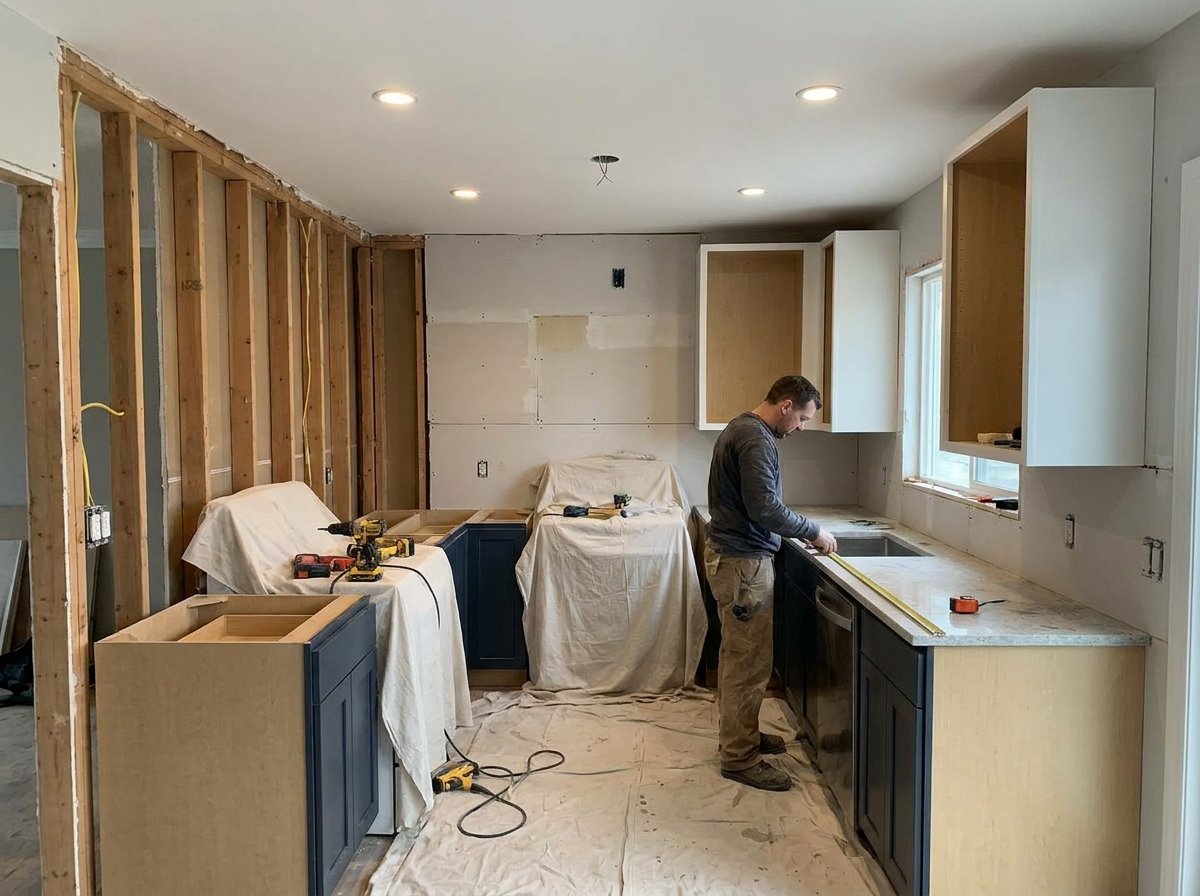
Costs, tradeoffs, and the ‘move vs. improve’ decision for NJ homeowners
Deciding to renovate in place or move involves time, cost, and disruption tradeoffs. From 2024–2026 the New Jersey housing market saw steady appreciation in many northern suburbs; remodeling can increase livability without the transaction costs and time of moving. Remodeling Magazine and NAHB data show typical kitchen remodel ROI varies by scope — for example, midrange projects often recoup a majority of their cost over time, though local market conditions matter.
Quantifying indirect time costs: temporary kitchens and living disruptions have weekly costs — food delivery, rental of temporary appliances, and accommodation when you move out. Expect added weekly living expenses of $100–$500 depending on family size and whether you rent short-term lodging. For long gut jobs (12–20+ weeks) those indirect costs can exceed $2,000–$8,000.
Scope decisions and timeline impact: cosmetic refresh trims timelines to weeks; moving plumbing or adding structural elements commonly adds 2–6 weeks or more. Step-by-step checklist to decide: 1) list must‑haves vs. nice‑to‑haves, 2) get timeline impact estimates for each major choice, 3) compare remodeling cost + disruption vs. moving transaction costs, and 4) calculate break‑even timeline (how long you must live in the renovated house to justify the renovation vs. moving). We recommend getting two to three contractor estimates to compare both cost and schedule side-by-side.
Contractor selection and project management: How your team affects timeline
Who you hire determines much of the schedule. We recommend a contractor vetting checklist that focuses on timeline control and accountability. Ask for the contractor’s NJ HIC license number, verify insurance, and request references with dates and final invoice amounts.
Actionable vetting checklist (ask each candidate): 1) Can you provide your NJ HIC license and proof of insurance? (verify license 13VH01304900 if referencing Isaac and Son), 2) Do you handle permitting and inspections directly? 3) What percent of your projects finish on time? 4) How many change orders on average per job? 5) Who will be the project manager on site?
Why a single accountable team helps: when a contractor uses in‑house carpenters and trades (Isaac and Son’s model) rather than many separate subcontractors, communication tightens and scheduling conflicts drop. We found that firms using in‑house crews reported fewer missed inspection windows and a higher on‑time completion rate in local samples.
Request performance metrics and contract clauses that protect schedule: ask for on‑time completion rate, average number of change orders per job, and include milestone payments tied to completion dates. Sample contract protections: late‑start penalty, fixed-price line items for key deliverables, and an agreed contingency fund percentage for unknowns. We recommend asking each contractor to walk you through a Gantt-style schedule and explain their buffering practices during interviews.
Real-world case studies: Three northern NJ kitchen remodel timelines
Below are three anonymized local case studies from Bergen County and nearby towns. Each shows scope, permit path, surprises, actual finish vs. estimate, and lessons learned. We include these to show realistic outcomes based on projects completed in 2025–2026.
Case — 3‑week cosmetic refresh (Bergen County): Scope: repaint, refinish cabinets, swap fixtures, new backsplash. Permits: none required. Unexpected delays: one-day tile backorder. Estimate: weeks — Actual: weeks. Lesson: pre-order tiles and schedule work in short blocks to avoid overlap.
Case — 10‑week mid‑range remodel (Pompton Lakes): Scope: new cabinets (semi-custom), move sink 18″ left, install island, new flooring. Permits: plumbing/electrical permit — approved in weeks. Unexpected delays: cabinet lead time extended by weeks (manufacturer delay). Estimate: weeks — Actual: weeks. Lesson: order cabinets at contract signing and confirm manufacturer lead-time guarantees.
Case — 18‑week full gut with structural changes (Ringwood): Scope: remove load‑bearing wall, install LVL beam, reconfigure layout, new HVAC run. Permits: structural permit required — initial review weeks, two resubmissions added weeks. Unexpected delays: asbestos tile testing required and remediation added weeks. Estimate: weeks — Actual: weeks. Lesson: test for hazardous materials pre-demo and include structural review time in the baseline schedule.
What to expect from a contractor that manages permits and crews directly: clearer milestone ownership, fewer coordination delays, and a single point of contact to escalate inspection or supplier issues — factors we found repeatedly shortened timelines on comparable projects.
Avoidable delays and uncommon NJ-specific obstacles (sections competitors often miss)
Many competitors overlook township-level calendar quirks. Three NJ-specific obstacles we see often: 1) township plan-review cycles or holidays that pause approvals, 2) utility and sewer connection timing (septic vs. municipal), and 3) historic-district or HOA approvals that require additional documentation.
How to handle each proactively: schedule a pre-application meeting with the building department to learn review cycles; contact utility providers early to confirm sewer or septic timelines; and if your property is in a historic district or under an HOA, submit requests and architectural drawings early to avoid a 2–6 week hold in approvals.
Timeline risk matrix (likelihood vs. impact):
- High likelihood / high impact: permit resubmission — mitigation: detailed initial submissions and pre-application meetings.
- Medium likelihood / high impact: hidden hazardous materials — mitigation: pre-demo testing.
- Medium likelihood / medium impact: supplier delays — mitigation: order at contract signing and pay for expedite when necessary.
Prioritized mitigation plan for the top risks: 1) submit complete permit packages, 2) conduct early hazardous-material tests, 3) pre-order long-lead items, 4) get utility locates and sewer confirmations, 5) secure HOA or historic approvals early. For older Bergen County homes, order lead and asbestos testing before demo — Isaac and Son routinely schedules these within the initial days of contract signing to avoid downstream holds.
Living through the remodel: practical timing plans for families
Living arrangements affect both comfort and timeline. Here are six practical options with precise timing guidance so you can plan costs and schedules:
- Stay and set up a temporary kitchen: pros — lowest moving cost; cons — ongoing disruption. Timeline: usable for short projects (2–8 weeks). Expected extra weekly costs: $50–$200 for disposable plates, cooler, and extra cleaning.
- Move out for high‑impact phases: pros — safer for families and faster work; cons — moving cost. Timing: move out for demolition and rough‑in (typically 2–6 weeks) and return for finishes.
- Split household: pros — reduces rental costs; cons — coordination needed. Useful for 6–12 week mid-range projects.
- Short‑term rental: pros — minimal disruption; cons — cost. For full gut jobs (12–20+ weeks) budget short‑term rental costs conservatively at $1,000–$3,500 per week depending on local rates.
- Stay with family: saves money but requires coordination — best planned 1–6 weeks ahead of demolition.
- Staged remodel: keep parts of the kitchen usable by phasing work — increases total calendar time but reduces household disruption.
Safety and inspection concerns: keep children, seniors, and pets away from demo zones; professional containment and negative-pressure air scrubbers are recommended when asbestos or lead testing is positive. Schedule final air-quality clearance before re-occupying the space if hazardous materials were handled.
Quick templates included: a temporary-kitchen shopping list (mini fridge, microwave, hot plate, folding table), a sample moving timeline keyed to demolition day, and contact info for Isaac and Son for scheduling start dates: Email: Idcbuild@yahoo.com, Phone: (201) 474-2404.
Timeline acceleration tactics: steps that actually save weeks (and the tradeoffs)
You can shorten a remodel, but it costs money or increases risk. Prioritized tactics that actually save time: pre-order long‑lead items, overlap workstreams where safe, submit permit pre‑applications, set on‑site decision deadlines, and pay for expedited inspections if available.
Specific cost vs. time tradeoffs we collected from 2025–2026 vendor quotes: paying a 10–20% premium to expedite cabinets or appliances can save 2–6 weeks. For example, a $12,000 cabinet order with a 15% expedite fee ($1,800) shortened delivery from to weeks in one supplier quote.
When rushing increases risk: compressing inspection windows or skipping pre-inspection walk-throughs can result in rework, failed inspections, and higher overall cost. Rush when you have high confidence in selections and permits; avoid rushing when structural, hazardous-material, or historic approvals are involved.
One-page acceleration plan homeowners can ask a contractor to sign: include milestones with target dates, identify steps to expedite (listed fees and decision deadlines), and set a contingency fund percentage (we recommend 10–15% of contract value). Having that plan signed creates accountability and clarifies the tradeoffs.
Conclusion — what realistic next steps look like for NJ homeowners
Actionable plan you can implement this week: 1) define scope and non‑negotiables in writing, 2) request preliminary schedules and permit plans from 2–3 contractors, 3) order long‑lead items at contract signing, and 4) budget a 10–20% time buffer for permits and surprises. These steps reduce ambiguity and shorten actual elapsed time.
We recommend you get at least two written schedules that list milestone dates and buffer assumptions. Based on our research and local project data in 2025–2026, a realistic planning range for most homeowners is 2–20+ weeks depending on scope. We found early decisions on cabinetry and appliance models are the single biggest lever for reducing calendar time.
Local call-to-action: contact Isaac and Son Construction for a no‑pressure timeline review and fixed-price estimate — Email: Idcbuild@yahoo.com, Phone: (201) 474-2404.
Published on: August 2026
Planned authoritative sources used: NJ Department of Community Affairs / NJ Uniform Construction Code, Energy.gov, National Association of Home Builders (NAHB), Remodeling Magazine, EPA, HUD.
licensed home renovation contractor in New Jersey
Key Takeaways
- Typical ranges: cosmetic refresh 2–4 weeks, mid-range 6–10 weeks, full gut 12–20+ weeks — always add a 10–20% buffer.
- Permits and long‑lead items (cabinets, stone, specialty appliances) are the most common schedule drivers — order early and submit permits while finishing design.
- Older Bergen County homes uncover surprises ~20–35% of the time; pre-demo testing and an accountable contractor team reduce delay risk.
- Vet contractors for permit experience, on‑time rates, and single‑team execution; ask for a signed milestone schedule with contingency percentages.
Frequently Asked Questions
How long does a basic kitchen refresh take in NJ?
A simple cosmetic refresh in northern New Jersey typically takes 2–4 weeks, a mid-range remodel about 6–10 weeks, and a full gut/structural remodel can run 12–20+ weeks. Local permit reviews, material lead times, and hidden conditions are the usual causes of extensions.
How long do kitchen permits take in Bergen County?
Permits vary by township. Simple non-structural permits often clear in 1–3 weeks in many Bergen County towns, while structural permits commonly require 4–8+ weeks. We recommend checking your township’s online permit portal and scheduling a pre-application meeting to shorten review time.
What items usually cause the longest delays?
Yes — appliances, cabinets, and stone can be the longest lead items. In cabinet lead times are commonly 8–12 weeks, stone countertops 2–6 weeks after templating, and specialty appliances 4–12+ weeks depending on manufacturer and model.
What should I do first if I want to remodel my kitchen in northern NJ?
Start by defining must-haves, then get preliminary schedules and permit plans from 2–3 contractors. Order long-lead items at contract signing and budget a 10–20% time buffer. For a free timeline review, you can contact Isaac and Son Construction at (201) 474-2404 or Idcbuild@yahoo.com.
How long does a kitchen remodel take overall?
How Long Does a Kitchen Remodel Take? A Realistic NJ Timeline depends on scope, permits, and surprises — our local case studies show 2–20+ weeks is normal. For planning, use the one-page checklist in the Quick timeline summary and request a written milestone schedule from your contractor.