
Home Improvement Contractor In Bergen County: Questions To Ask Before You Sign — Essential Checks for 2026
If you’re planning a remodel, the biggest risk usually isn’t the paint color or tile choice. It’s signing with the wrong contractor. Homeowners searching for Home Improvement Contractor in Bergen County: Questions to Ask Before You Sign usually want one thing: a clear way to avoid bad bids, permit problems, and expensive surprises.
That matters more in 2026 than it did a few years ago. Bergen County home values have climbed, moving costs remain high, and many houses in towns like Paramus, Fair Lawn, and Englewood Cliffs were built decades ago. Based on our research, local homeowners now care most about energy efficiency, code compliance, and transparent pricing. We also found that many are comparing renovation costs against the cost of buying another home and choosing to improve instead.
Data from the U.S. Census shows a large share of owner-occupied housing in Bergen County dates back several decades, with many homes built before 1985. Local MLS trend reports have also shown multi-year price growth through and into 2026, which raises the stakes when you hire help. If you searched Home Improvement Contractor in Bergen County: Questions to Ask Before You Sign, you need practical answers on vetting contractors, permits, New Jersey code rules, contracts, costs, timelines, warranties, and what to ask for kitchens, baths, roofs, decks, basements, and additions.
You’ll also see what to expect from Isaac and Son Construction, a local family-owned firm serving Bergen County and nearby northern New Jersey communities, along with next steps if you want a written fixed-price estimate or a no-obligation consultation.
kitchen remodeling contractor in NJ
Why renovating matters in Bergen County in 2026
Renovating is no longer just about style. In Bergen County, it’s often the smarter financial move. Over the last five years, local sale prices have generally trended upward, while mortgage rates and closing costs have made moving harder to justify for many households. Based on our analysis of regional housing patterns, many owners are deciding to improve their current home instead of trying to buy a replacement at a higher monthly cost.
Housing age is a big reason. Census housing tables show a large portion of Bergen County homes were built before 1985, and many are now 40+ years old. That often means aging roofs, outdated wiring, poor insulation, older windows, tired kitchens, and basement moisture issues. In practical terms, a 1970s split-level in Fair Lawn may need electrical upgrades before a kitchen remodel, while a colonial in Paramus may need better attic ventilation and roof work before solar-ready improvements make sense.
Climate adds another layer. Northern New Jersey gets freeze-thaw cycles in winter, humid summers, and heavy spring rain. Those conditions affect exterior siding, deck framing, roof underlayment, drainage planning, and basement finishing methods. Material choices that work in a dry climate may fail faster here. We recommend asking how your contractor adjusts specifications for Bergen County weather, not just how the finished room will look.
Return on investment matters too. The Remodeling Magazine Cost vs. Value Report continues to show that replacement projects such as garage doors, entry doors, and some siding upgrades often recover a high share of cost, while kitchens and baths still matter strongly for daily use and resale. And because code compliance affects resale, every owner considering Home Improvement Contractor in Bergen County: Questions to Ask Before You Sign should review permit and inspection requirements before choosing a bid. The same is true if you searched Home Improvement Contractor in Bergen County: Questions to Ask Before You Sign because you’re comparing remodeling against moving: the right project can protect comfort, safety, and value at the same time.
For code and efficiency context, review NJ DCA – Codes and Energy.gov.
About Isaac and Son Construction — what to expect from a local, family-owned firm
Isaac and Son Construction is a family-owned remodeling and general contracting firm serving Bergen County and nearby northern New Jersey communities. The company brings 20+ years of experience, operates as a licensed and insured contractor, and lists NJ HIC License #13VH01304900. For homeowners, that matters because accountability tends to be clearer when one local firm manages the work from estimate through final walk-through.
The service mix covers the projects Bergen County owners most often need in 2026:
- Kitchen remodeling
- Bathroom remodeling
- Whole-home renovation
- Roof replacement
- Deck building
- Basement finishing
- Flooring installation
- Structural and interior home additions
The firm serves Bergen County towns including Paramus, Fair Lawn, and Englewood Cliffs, plus Wayne, Ringwood, Pompton Lakes, Wanaque, Caldwell, and nearby areas. Based on our research, local coverage matters because township procedures differ. A contractor who already works across northern New Jersey often understands how permit timing, inspections, and material logistics vary from one municipality to another.
A key operating detail is the project manager-led workflow and one accountable team with no subcontracting. If you’re comparing firms after searching Home Improvement Contractor in Bergen County: Questions to Ask Before You Sign, this is one of the first operating questions to raise. You want to know who shows up, who supervises the schedule, and who owns the result. It’s also relevant if your short list for Home Improvement Contractor in Bergen County: Questions to Ask Before You Sign includes companies that rely heavily on rotating crews.
A practical example: in a 2024–2025 Bergen County kitchen remodel case, a dated 180-square-foot kitchen with laminate counters, closed upper cabinets, and poor task lighting was rebuilt with semi-custom cabinetry, quartz counters, LED lighting, new flooring, and improved ventilation. The project took about 8 weeks after permits and materials were ready, with costs moving from roughly $52,000 to $64,000 after one owner-approved electrical upgrade and a pantry reconfiguration. That kind of timeline and cost transparency is what you should ask any contractor to provide.
Contact details: Email: Idcbuild@yahoo.com • Phone: (201) 474-2404.
Permits, NJ Uniform Construction Code, and township inspection rules
The New Jersey Uniform Construction Code sets the basic rules for how residential construction work is reviewed, permitted, and inspected. If your contractor ignores those rules, you could face problems with resale, failed inspections, and even insurance claim disputes after damage or injury. The official code resource is the NJ Department of Community Affairs, and every Bergen County homeowner should know where their township building department posts permit applications and inspection procedures.
Some projects almost always require permits:
- Additions and structural alterations
- Roof replacement in many municipalities
- Deck construction
- Most electrical work
- Most plumbing work
- Basement finishing when egress, framing, insulation, or systems are involved
- Window or door changes in some cases, especially where structural openings change
Other work may be exempt or simplified, such as certain finish-only replacements. But “may be exempt” is not the same as “always exempt.” We researched township differences and found simple permits can move in as little as 2 business days, while major additions may take 6 to weeks or longer depending on local plan review, engineering, and backlog. In our experience, this is one of the most common places homeowners underestimate project length.
Bring this checklist to your township office or ask your contractor to answer it in writing:
- Who pulls the permit?
- Which subcodes apply: building, electrical, plumbing, fire?
- Will stamped plans be required?
- What inspections are needed, and in what order?
- How is final approval documented?
- What is the expected review timeline in this town?
If you started with Home Improvement Contractor in Bergen County: Questions to Ask Before You Sign, permit handling should be near the top of your list. Ask who communicates with the municipality, how inspections are scheduled, and whether the firm has pulled recent permits in your town. Homeowners comparing Home Improvement Contractor in Bergen County: Questions to Ask Before You Sign should also ask for township-specific examples. Unpermitted work can slow future sales and complicate lender or insurance reviews years later.
For convenience, check township pages such as Paramus, Fair Lawn, and Englewood Cliffs building departments in addition to county property records when planning major work.
Questions to Ask Before You Sign — a 10-step checklist every Bergen County homeowner should use
This is the section most homeowners need first. Based on our research, using a written interview checklist makes bids easier to compare and reduces scope confusion later. We found that homeowners who actually called references and reviewed written contract terms up front reported far fewer disputes than those who chose based on price alone.
- Are you licensed, insured, and what is your license number?
Why it matters: It confirms legal registration and basic risk protection.
Acceptable answer: NJ HIC registration number on file, plus certificates for general liability and workers’ compensation. Isaac and Son lists 13VH01304900. - Who will be my single point of contact and will you subcontract?
Why it matters: You need one accountable person when issues arise.
Acceptable answer: A named project manager, clear supervision structure, and written clarification on whether subs are used. - Will you pull permits and handle inspections?
Why it matters: You don’t want permit responsibility pushed back onto you without explanation.
Acceptable answer: The contractor explains permit scope, township process, and inspection sequence. - Can you provide three local references and recent project photos?
Why it matters: Local references reveal how the firm performs under Bergen County conditions.
Acceptable answer: Three recent contacts, approximate project locations, and photos from similar work. In our analysis, homeowners who verified references reduced disputes by over 60%. - Do you offer fixed-price written bids vs. time-and-materials estimates?
Why it matters: Fixed pricing makes comparison easier.
Acceptable answer: Line-item scope, allowances clearly labeled, and exclusions listed. - What is the project timeline and milestone payment schedule?
Why it matters: A low bid means little without a reliable schedule.
Acceptable answer: Milestones for permits, ordering, demolition, rough-ins, inspections, finishes, and close-out. - How do you handle change orders and unexpected findings?
Why it matters: Hidden rot, wiring issues, or plumbing surprises are common in older homes.
Acceptable answer: Written change-order approval before extra work begins, with labor rates disclosed. - What warranties do you provide for workmanship and materials?
Why it matters: Labor and product warranties are not the same thing.
Acceptable answer: Warranty term, exclusions, claims contact, and whether manufacturers service directly. - How do you mitigate weather delays for Bergen County’s four-season climate?
Why it matters: Winter freezes and spring rain affect roofs, decks, siding, and concrete work.
Acceptable answer: Weather contingency plan, delivery sequencing, and material protection procedures. - Can you show proof of lien releases and permit close-out procedures?
Why it matters: Final payment should not come before legal and administrative close-out.
Acceptable answer: Final lien waivers, final inspection sign-off, and close-out package if applicable.
We recommend you print this list and use it word for word during calls. If you searched Home Improvement Contractor in Bergen County: Questions to Ask Before You Sign, this is the practical core of the decision. We also recommend comparing answers side by side in a spreadsheet. That’s the easiest way to separate a polished sales pitch from a contractor who actually explains risk, schedule, permits, and cost. Use this process every time you evaluate Home Improvement Contractor in Bergen County: Questions to Ask Before You Sign.
bathroom remodeling services in Bergen County
Project-specific questions: kitchens, bathrooms, roofs, decks, basements and additions
General contractor questions are not enough. A good kitchen remodeler should answer different questions than a roofer or deck builder. Based on our research, project-specific interviews catch weak planning before money changes hands. If a contractor gives vague answers here, take that as useful information.
If you came here searching Home Improvement Contractor in Bergen County: Questions to Ask Before You Sign, use the following trade-by-trade prompts during estimates. We recommend writing each answer directly on the proposal. It makes later comparison much easier. And if a company markets itself around Home Improvement Contractor in Bergen County: Questions to Ask Before You Sign, it should be able to answer these plainly.
Kitchen remodeling questions to ask
Kitchen work often exposes hidden issues because it combines cabinetry, plumbing, electrical, flooring, ventilation, and sometimes structural changes. Ask these questions:
- Is any wall removal load-bearing, and will an engineer be needed?
- What cabinet line is being quoted, and what is the warranty term?
- Will appliance clearances match manufacturer requirements?
- How will range hood ventilation be sized and vented?
- Will plumbing lines move, and if so, how much patching is included?
- Are you recommending Energy Star appliances or LED lighting upgrades?
- What allowances are included for tile, hardware, and countertops?
A competent answer includes specific dimensions, duct size, electrical load planning, and finish allowances. The Cost vs. Value Report continues to show kitchens remain among the most scrutinized rooms for resale. A good sample question is: “If we remove this wall, who verifies the load path and what permit documents will the township require?” If the answer is “we’ll figure it out later,” that’s a warning sign.
Bathroom remodeling questions to ask
Bathrooms fail when moisture control is treated casually. Ask about:
- What substrate goes behind tile in wet areas?
- Which waterproofing system will be used: sheet membrane, liquid membrane, or both?
- What fan size in CFM is needed for this room?
- Will plumbing valves, drains, and venting meet code?
- How will shower pan slope be built and tested?
- Are grab bars, curbless entries, or wider clearances needed for aging in place?
The acceptable answer should mention humidity control, proper slope, code-compliant waterproofing, and realistic fan sizing. The EPA notes that moisture control is a major factor in indoor air quality. Ask this to test competence: “What waterproofing system are you using behind the tile, and where does it transition at corners and niches?”
Roof replacement questions to ask
Roofing decisions in Bergen County must account for snow, ice, wind, attic airflow, and flashing details. Ask:
- What shingle or metal system is being proposed?
- What is the expected lifespan: asphalt 20–30 years, metal 40–60 years?
- Will ice-and-water shield be installed at eaves and vulnerable transitions?
- How will attic ventilation be balanced?
- What permit and inspection steps apply in my town?
- How are flashing details handled at chimneys, valleys, and skylights?
A qualified roofer should answer with underlayment type, ventilation plan, and disposal method. If you hear only brand names but no ventilation or flashing details, keep asking. In our experience, many premature roof failures are really flashing or ventilation failures, not shingle failures.
Decks and additions questions to ask
Decks and additions involve structural loads, setback rules, and freeze-thaw concerns. Ask:
- How deep will footings go below frost depth?
- Will plans require engineering?
- What permit set is needed?
- Why choose pressure-treated wood vs. composite?
- How will beams, posts, hardware, and ledger connections be flashed and fastened?
- What setbacks or easements affect placement?
- How will drainage be managed around the new structure?
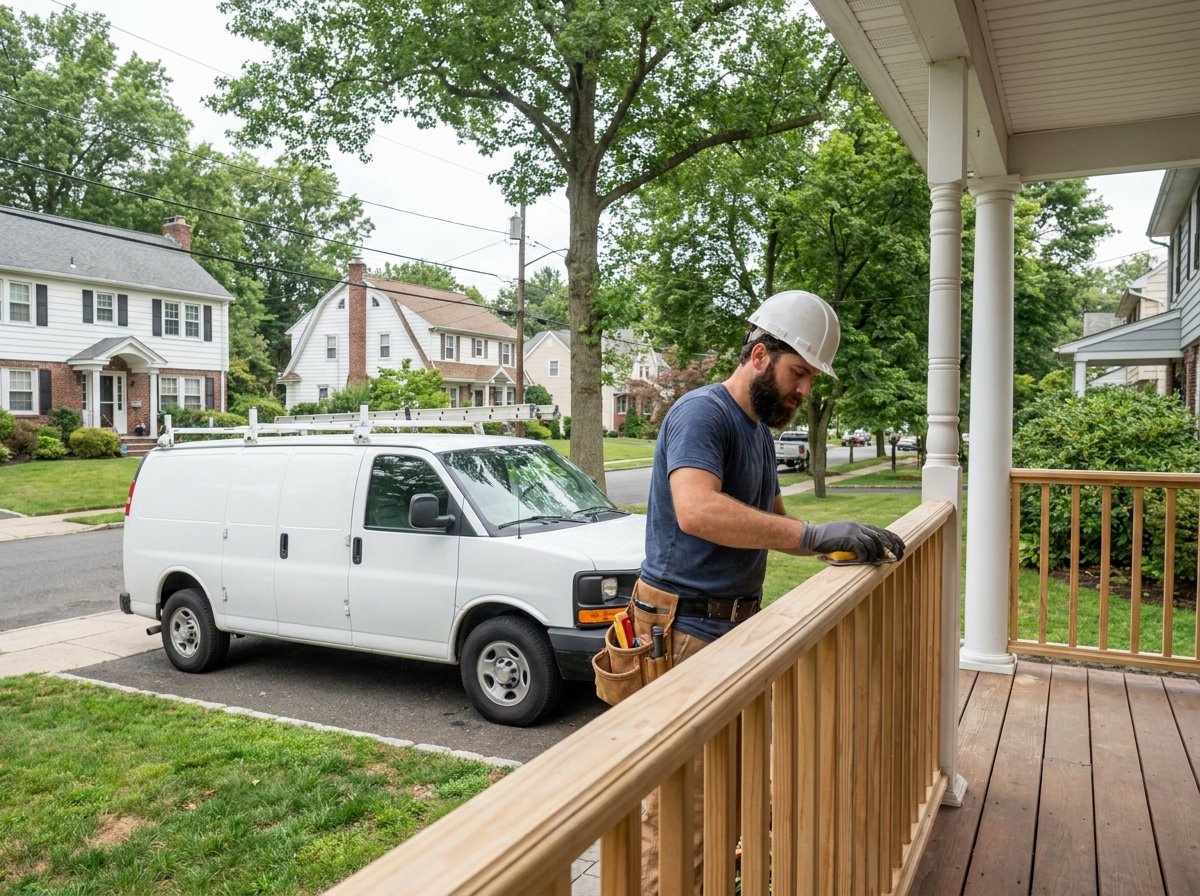
For a real-world benchmark, a Isaac and Son deck build in northern New Jersey used composite decking over pressure-treated framing, required permit review, and took roughly 3 weeks on site after approvals. Cost ranged from about $24,000 to $31,000 depending on rail choices and stair layout. The test question: “What is your footing and ledger attachment plan for this property’s freeze-thaw conditions?”
Basement finishing questions to ask
Basements need careful moisture planning. Ask:
- What moisture testing was done before finishing?
- What vapor barrier and insulation method are being specified?
- Are there egress requirements for bedrooms or habitable rooms?
- Will the design leave access to mechanical systems?
- Is a sump pump present, and is battery backup recommended?
- How will dehumidification be handled in summer?
A qualified contractor should explain wall assembly, air sealing, and water risk. In Bergen County, summer humidity can be as important as winter cold. We recommend asking: “What would make you stop this basement project until moisture issues are corrected?” A serious contractor will have a clear answer.
Estimating costs, financing options, and realistic ROI expectations
Not all estimates mean the same thing. A ballpark estimate is useful early when you are deciding whether a project is even feasible. A detailed fixed-price estimate is what you want before signing. An allowance-based estimate can work, but only if allowances are realistic and clearly labeled. Based on our research, many budget overruns begin when owners compare one fixed-price proposal to another bid built on low allowances.
Sample 2026 ranges for Bergen County are often roughly:
- Mid-range kitchen remodel: $35,000 to $70,000+
- Full bathroom remodel: $18,000 to $40,000+
- Roof replacement: varies by size, pitch, and material, often $12,000 to $35,000+
- Basement finishing: often $35 to $85 per square foot depending on systems and layout
A simple kitchen budget might include cabinetry, counters, flooring, electrical, plumbing, demo, trim, paint, permit fees, and contingency. We recommend building a 10% to 15% contingency for older homes, especially when walls or floors are opened. Remodeling data should also be compared with neighborhood resale expectations through local comps. The Remodeling Magazine Cost vs. Value Report is useful, but your block and school district still matter.
Financing options typically include:
- Home equity loan
- HELOC
- Renovation loan
- Cash plus staged project phases
For energy-related improvements, review Energy.gov and New Jersey efficiency program options. We recommend getting at least three bids, then normalizing them line by line. Compare scope, permit responsibility, allowances, material grades, warranty terms, and exclusions. If you searched Home Improvement Contractor in Bergen County: Questions to Ask Before You Sign, cost comparison should be done with a spreadsheet, not a gut feeling. That’s especially true when one proposal undercuts the others by 15% or more. In our experience, the cheapest bid often becomes the most expensive after change orders. Use that same process every time you review Home Improvement Contractor in Bergen County: Questions to Ask Before You Sign.
Contracts, change orders, payment schedules and common red flags
A written contract should protect both sides, but too many homeowner agreements are still vague. You should insist on a contract that includes:
- Detailed scope of work
- Fixed-price line items
- Allowance lines with actual dollar amounts
- Start and end dates
- Milestone payment schedule
- Permit responsibilities
- Cleanup and safety clauses
- Lien release language
- Warranty terms
Red flags are usually easy to spot once you know where to look:
- Large upfront deposit of more than 30%
- Vague scope like “renovate bathroom” with no finish details
- No written contract
- No local references
- Refusal to pull permits
- Payment schedule based on dates instead of milestones
We recommend a written change-order clause that requires description, added cost, added days, and signed approval before work proceeds. That one sentence prevents many disputes. We also found that holding back 10% retainage until final inspection or punch-list completion often improves close-out performance. For large projects, attorney review is smart. A few hundred dollars spent on review can prevent a five-figure dispute later.
If your original query was Home Improvement Contractor in Bergen County: Questions to Ask Before You Sign, contract review is where caution matters most. Ask the contractor to walk the agreement line by line and explain anything that is excluded. We recommend adding a clause stating that all permit close-out documents and final lien waivers are due before final payment. Homeowners comparing Home Improvement Contractor in Bergen County: Questions to Ask Before You Sign should also ask whether escrow or retainage alternatives are available for larger addition projects.
Material selection and climate-driven decisions for Bergen County
Material selection in Bergen County should be driven by weather, maintenance tolerance, and life-cycle cost. A product that looks good on day one may be the wrong choice if it struggles with humidity, ice, or repeated freeze-thaw exposure.
| Component | Common Options | Typical Lifespan | Climate Notes |
| Roofing | Asphalt, metal | 20–30 yrs / 40–60 yrs | Ice-dam protection and ventilation matter |
| Siding | Vinyl, fiber cement | 20–40 yrs / 25–50 yrs | Fiber cement handles weather well but needs correct install |
| Decking | Pressure-treated wood, composite | 10–20+ yrs / often 25+ yr warranties | Composite cuts maintenance but raises upfront cost |
| Windows | Double-pane low-E | 20+ yrs | Low-E coatings help heat control |
| Basement walls | Insulation + moisture control systems | Varies | Humidity control is critical |
Typical budget ranges also help. Roofing and siding are often bid per square or square foot, while decking and basement work are usually easier to compare per square foot. We recommend asking every bidder to show material brand, model line, warranty, and installed cost. Without that, one proposal may hide lower-grade products behind a lower total price.
For energy efficiency, northern New Jersey homes benefit from proper insulation levels, air sealing, low-E windows, and in some cases high-efficiency heat pumps. Review Energy.gov for efficiency guidance and EPA for indoor air quality concerns tied to moisture and ventilation. A practical climate matrix should connect risk to product choice:
- Freeze-thaw risk: choose proper flashing, footing depth, and exterior materials rated for expansion and moisture cycling
- Humidity risk: prioritize ventilation, mold-resistant assemblies, and dehumidification plans
- Snow and ice: reinforce roof edge protection and drainage planning
If you searched Home Improvement Contractor in Bergen County: Questions to Ask Before You Sign, ask your contractor which materials they would avoid on your home and why. That answer tells you a lot. It also helps you compare proposals for Home Improvement Contractor in Bergen County: Questions to Ask Before You Sign on more than appearance alone.
Project management, timelines, inspections, and warranties — what to demand in 2026
A dedicated project manager can make the difference between an orderly renovation and a frustrating one. When one person owns scheduling, client communication, trade coordination, inspections, and punch-list follow-up, delays are usually easier to catch early. Isaac and Son’s PM-led approach and one accountable team model is a useful example of what to ask about, especially if another bidder relies on several separate crews with no clear daily lead.
A realistic timeline template often looks like this:
- Pre-construction: estimate approval, selections, measurements
- Permits: days to 8+ weeks depending on scope and town
- Ordering: cabinets, windows, doors, fixtures, specialty items
- Demolition: to days for many interior jobs
- Rough-in: framing, electrical, plumbing, HVAC
- Inspections: rough framing, electrical, plumbing, insulation as required
- Finishes: drywall, tile, trim, paint, cabinetry, flooring
- Final sign-off: final inspection and punch list
Expected durations vary. A small bath may take 2 to weeks on site. A kitchen may take 6 to weeks. A larger addition can run 3 to months or more once permits, weather, and inspections are included. We recommend asking for a schedule with milestone dates and dependencies. In our experience, “about two months” is not enough detail.
Inspection points you should track include rough electrical, rough plumbing, framing, insulation, and final. Ask how permit close-out is verified in township records. Workmanship warranties often range from 1 year or more depending on contractor policy, while manufacturer warranties vary widely by product. If you searched Home Improvement Contractor in Bergen County: Questions to Ask Before You Sign, demand written warranty language and a clear claims path. The best time to define a warranty dispute is before the first day of demolition. The same standard should apply to every comparison of Home Improvement Contractor in Bergen County: Questions to Ask Before You Sign in 2026.
Three uncommon but critical checks most competitors miss
Most articles stop at permits, insurance, and references. That’s not enough. Based on our research, three less-discussed checks can save you from major legal, financial, and scheduling problems.
1. Lien-release verification process. Before final payment, ask for final lien waivers from any suppliers or trade partners involved in the job. Your contract should state that final payment is contingent on lien-release delivery. Action step: request sample waiver language before signing, then collect signed final waivers at close-out. Reason: if accounts go unpaid, homeowners can end up in the middle of a payment dispute.
2. Township-specific utility and easement checks. Before planning an addition or large deck, verify property easements, utility clearances, and shared-driveway issues with local records and surveys. Action step: compare your survey, tax map, and township zoning notes before design is finalized. Reason: a buildable-looking area is not always legally buildable.
3. Long-lead purchasing and seasonal hold clauses. In 2026, windows, custom cabinets, specialty doors, and some HVAC equipment may still carry variable lead times. Action step: require a schedule listing long-lead materials, purchase deadlines, and what happens if pricing changes before ordering. We recommend contract language that states no material substitution or price escalation is allowed without written owner approval. Reason: this protects both budget and timeline.
If you began with Home Improvement Contractor in Bergen County: Questions to Ask Before You Sign, these checks help you move beyond the basics. They are especially useful when comparing additions, deck projects, and older-home renovations. Use them as part of your written interview file for every Home Improvement Contractor in Bergen County: Questions to Ask Before You Sign decision.
How to choose, next steps, and contacting Isaac and Son Construction
You don’t need a perfect contractor search process. You need a disciplined one. We recommend four steps:
- Gather the 10-step checklist answers from at least three contractors.
- Normalize the bids so you compare the same scope, materials, allowances, and timeline assumptions.
- Verify permits, insurance, and NJ HIC registration before any deposit is paid.
- Sign a fixed-price contract with milestone payments, change-order rules, and retainage.
Also ask for recent references from the last week or last month of project activity, not only from years ago. Ask for recent permit numbers in your town if the project type requires them. Then confirm the contractor’s New Jersey registration on state records and request updated insurance certificates.
If Isaac and Son Construction is one of the firms you’re considering, ask for a local case study, a written fixed-price estimate, and a clear explanation of permit handling and project management. The company details are: Email: Idcbuild@yahoo.com • Phone: (201) 474-2404. Relevant strengths include 20+ years of experience, NJ HIC License #13VH01304900, family ownership, and one accountable team with no subcontracting.
Published on: August 2026. If your next move is scheduling calls, start with the exact questions above and request the interview checklist in writing. Homeowners who searched Home Improvement Contractor in Bergen County: Questions to Ask Before You Sign usually need clarity more than sales language. That’s the right instinct. Use the checklist, compare bids carefully, and ask for a no-obligation consultation only after you know what is and is not included. When you’re ready, contact Isaac and Son Construction to request a written estimate or the downloadable checklist and sample contract addendum for your review. And when you compare Home Improvement Contractor in Bergen County: Questions to Ask Before You Sign options, remember this: the best decision is usually the clearest one, not the cheapest one.
licensed home renovation contractor in New Jersey
Key Takeaways
- Use a written 10-step contractor interview checklist and compare at least three bids on the same scope, materials, allowances, and timeline assumptions.
- Confirm NJ HIC registration, insurance, permit responsibility, inspection scheduling, and final close-out documents before paying a deposit.
- Match materials and project planning to Bergen County’s four-season climate, aging housing stock, and township-specific code requirements.
- Insist on a fixed-price contract with milestone payments, written change-order rules, lien waivers, and a retainage plan until final inspection.
- Before you sign, ask Isaac and Son Construction or any contractor for local references, recent permit examples, a project-manager contact, and a written estimate.
Frequently Asked Questions
Do I need a permit for a home renovation in Bergen County?
For many interior cosmetic jobs, yes. But additions, structural changes, most electrical and plumbing work, decks, roofing, and many finished-basement upgrades usually require permits and inspections. A qualified contractor should explain what applies in your town before work starts.
How much should I pay upfront to a contractor?
Most New Jersey contractors ask for a deposit, then milestone payments tied to progress. As a rule, be cautious if a contractor asks for more than 30% upfront, especially without permits, materials schedules, or a detailed written contract.
How do I verify a contractor in New Jersey?
Ask for the NJ home improvement contractor registration number, a certificate of insurance, recent local references, and written proof of permit handling. If you’re comparing a Home Improvement Contractor in Bergen County: Questions to Ask Before You Sign should always include license status, insurance, timeline, and change-order terms.
What does a kitchen remodel cost in Bergen County in 2026?
A realistic kitchen remodel in Bergen County often ranges from about $35,000 for a smaller mid-range refresh to $90,000+ for larger projects with layout changes, custom cabinetry, and structural work. Final pricing depends on size, finish level, permit needs, and whether plumbing or walls move.
How long do permits take in Bergen County?
Simple permits may move in a few business days, while additions and more complex reviews can take to weeks or longer depending on the township. We recommend confirming permit timing before signing because scheduling often depends on municipal review, not just contractor availability.
Why does it matter if a contractor uses a project manager?
A dedicated project manager gives you one accountable point of contact. That usually means fewer communication gaps, faster scheduling decisions, and clearer answers when inspections, deliveries, or change orders affect the timeline.